
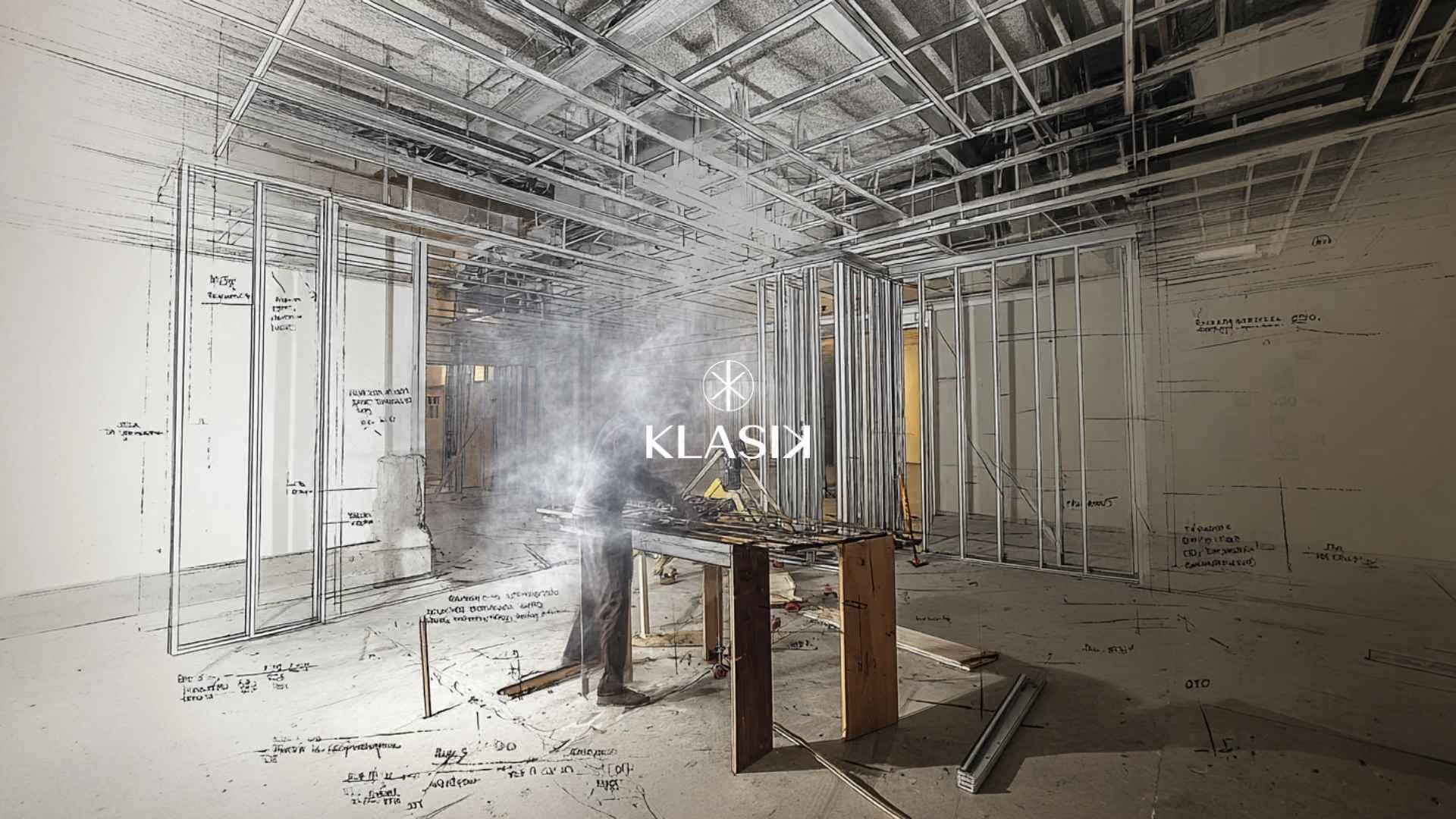
The instinct to shut down completely and get a renovation over with is understandable. In practice, the math is usually more complicated than “finish faster, save money.” For a busy Chicago restaurant, a full closure does not just pause sales. It can also disrupt staffing, guest habits, delivery volume, and reopening momentum. Reopening is rarely a simple switch-flip. It is often a second launch, but with less novelty than the first.
Phased renovation can reduce disruption materially. Construction costs often rise when work is broken into controlled phases because crews lose efficiency, temporary protection and barricades are required, and after-hours labor is more expensive. But that premium can still be smaller than the financial damage of a full shutdown, especially for operators with strong weekly sales and limited tolerance for downtime.
The key point is this: the decision should be based on lost operating profit and restart friction, not revenue alone. A restaurant doing $40,000 to $80,000 per week may preserve substantial value by staying partially open, but the breakeven point depends on margins, rent obligations, labor structure, and the scope of work. Phasing does not eliminate revenue loss entirely. It usually reduces it.
Staffing is part of that equation. Closures often create turnover, especially in hourly roles. Rehiring and retraining after reopening can add hidden cost and extend the ramp back to normal performance. Those costs do not appear on the construction budget, but they are real.
Some Chicago retail and restaurant leases include continuous operation language, co-tenancy requirements, use covenants, or tenant improvement recapture provisions that can make an extended closure more expensive than an operator expects. The exact language varies widely by lease, so this is not a universal rule. But for tenants in high-demand corridors, closure-related penalties or reimbursement issues are a real lease review item, not a theoretical one.
Tenant improvement allowances add another layer. In many commercial leases, TI is structured as a reimbursement cap, not an upfront payment. That means cash flow, not just total cost, should be part of the renovation plan from day one.
Phasing can sometimes improve working capital management if the lease allows reimbursement by milestone or partial completion. But that is lease-specific. It should be framed as a negotiation and documentation issue, not as an automatic advantage of phased construction.
A phased renovation starts before any demolition. The first real task is understanding how the business operates: peak meal periods, delivery timing, prep flow, shift changes, high-margin dayparts, and the way staff and product move through the space.
That operating map shapes the phase plan. A concept with heavy weekend brunch traffic will sequence differently than a dinner-driven restaurant with steady weekday volume. In a successful phased project, the construction schedule bends around the operating schedule as much as the scope allows.
In Chicago, pre-construction also has to account for permits and inspections. Even when phased permitting is possible, inspection timing and permit sequencing still need buffer built into the schedule.
The most important decision in a phased renovation is where one work zone ends and the next begins. Those boundaries cannot be drawn based only on what looks clean on a floor plan. They have to follow the reality of mechanical, electrical, and plumbing systems.
A dining room and bar may appear separable architecturally, but if they share HVAC returns, panel access, plumbing runs, or exhaust pathways, the division can create downstream conflicts. That is why experienced teams trace MEP dependencies before defining phases. A clean-looking line on paper can become a coordination problem in the field.
Temporary barricades matter more than most operators expect. In a restaurant setting, they need to do more than mark off space. They have to manage dust, support life-safety requirements, reduce noise where possible, and preserve a credible guest experience.
Operators often assume construction can happen “when we are closed.” In reality, that window is usually short. If the restaurant closes late, the crew still has to set up, complete work, clean, and restore the space for service the next day. That compressed window is one reason after-hours work increases labor cost and reduces production efficiency.
Noise is another hard limit. In mixed-use buildings, especially those with residential tenants above retail, demolition, cutting, and other loud work may be restricted or impractical overnight. In those cases, the loudest activities may need to happen during a planned daytime shutdown of a zone, with quieter finish work pushed to nights and early mornings.
Phased work usually increases coordination points. Each phase may require inspections before walls close or systems are energized. The practical issue is not whether phasing is legally possible. It is whether the team has built a schedule that accounts for review cycles, comments, and inspection lag.
That is why phased renovation often takes longer on the calendar than a full closure. Operators should not compare “eight closed weeks” to “eight open weeks.” The more realistic comparison is “shorter schedule with zero revenue” versus “longer schedule with ongoing sales.”
Phasing is not automatically the best answer. Small spaces with tightly integrated systems, projects that require major structural intervention, and jobs involving hazardous material abatement may still be better executed as a full closure. The right call depends on the physical constraints of the building, the lease, the operating model, and the operator’s cash flow position.
The point is not that every restaurant should phase. The point is that too many teams make the closure decision before doing the actual math.
The right pre-construction question is not “Can you phase this?” Most contractors will say yes. The better question is: “What was the last phased restaurant project you ran, where did the schedule tighten up, and how did you adjust without disrupting service?”
That answer reveals whether the contractor understands phased work as an operational discipline rather than a generic construction service. Phased renovation requires a superintendent who can coordinate daily with management, trades willing to work under compressed windows, and a schedule that is detailed enough to reflect service realities, not just weekly milestones.
Transparency matters more in phased work than in a conventional shutdown. Operators should expect a phase-level schedule, clear decision deadlines, and structured reviews between phases. Without that, the project can drift even when the craftsmanship is solid.
Building while open is possible, but it is not casual. It requires disciplined sequencing, realistic expectations about cost and duration, and a project team that understands how restaurants actually operate.
For many Chicago restaurants, the real decision is not whether phased renovation sounds inconvenient. It is whether a full closure creates more financial and operational damage than the added construction complexity. In many cases, it does.
If you are planning a restaurant renovation, retail buildout, or hospitality remodel in Chicago, the first step is not choosing between “open” and “closed.” It is running the project through a real pre-construction analysis that includes operating impact, permit sequencing, inspection risk, and lease constraints.
If you want to understand whether phased construction is viable for your project, start the conversation before design is finalized, not after pricing comes back.

.png)
Klasik Construction is a Chicago-based luxury general contractor specializing in commercial buildouts, restaurant construction, retail tenant improvement, and hospitality interiors. Every project is hands-on and relationship-driven.

.png)
.png)

